
MEL COMPOSITES EXTENDS THE SERVICE LIFE OF EXISTING UNDERGROUND TANKS WITH INNOVATIVE COMPOSITE MATERIAL REPAIR TECHNIQUES
MEL Composites is a raw material supplier highly specialized in vacuum infusion techniques. We spoke with Eduardo Galofré, general manager, about a novel composite material repair methodology that uses a solution based on vacuum infusion kits for the in-situ repair of fuel tanks, adapting existing steel tanks to EU regulations and extending their service life with active leak control.
Q – Could you briefly summarize the typical problems customers have with their underground fuel storage tanks?
Historically, most underground fuel storage tanks are made of single-walled steel sheet. Corrosion on the surface, both on the inside and outside faces, leads to defects in the walls that cause leaks, which can make the tanks spill product and contaminate the soil and groundwater beneath. There is a European standard that requires underground tanks to be double-walled, but despite this regulation, many tanks have not been replaced or equipped with a lining. In collaboration with an engineering firm, MEL Composites developed a process to transform single-walled fuel tanks into double-walled tanks, with an interstitial chamber between the walls to allow for fuel leak detection, using a unique resin infusion process.
Q – Can you describe how composite materials offered the best repair solution?
After an inspection that identifies leaks and weak points, a composite material repair solution offers the enormous advantage that it can be applied in situ, without dismantling the underground tank. A well-designed composite material solution can be modular (to fit through the small access hatches) and can be used to create a very consistent laminate that seals all leaks and restores integrity. It is also possible to avoid 'hot work' and sanding or welding of the steel, which could also pose an explosion risk.
Q – How does your composite material repair technique differ from the traditional tank repair methodology?
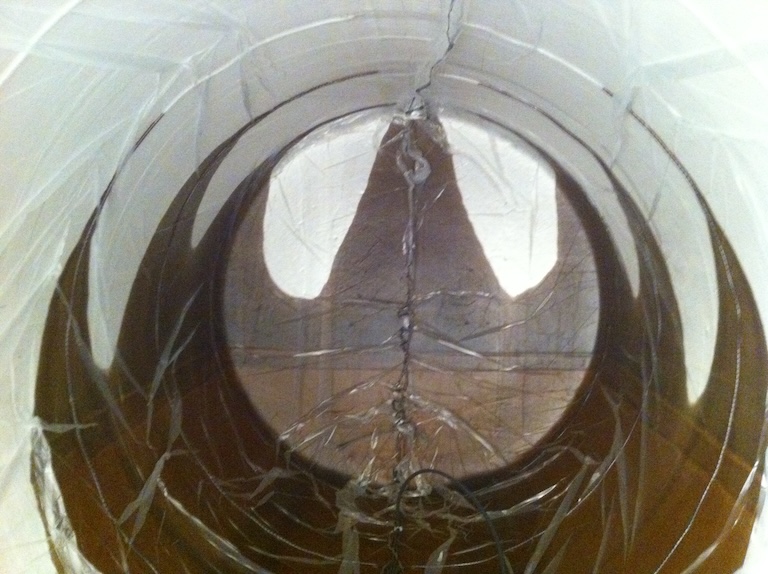
Some work has been done by third parties with wet layup systems applied in poorly ventilated confined spaces inside tanks. These techniques have produced low-quality laminates and have even caused accidents that endangered technicians. The process that MEL offers involves supplying a kit of fully prepared materials, in a format that allows easy access to the inside of the tank and its application by unqualified personnel. With these materials, and through a resin infusion process, a new composite material tank is manufactured inside the existing one, leaving an interstitial air chamber between both for the placement of a leak detection system. The materials, including fibers, cores, and vacuum bags, are supplied cut and adapted for direct installation without needing to be processed. MEL's technique culminates with the resin infusion that fully impregnates the fibers and guarantees the quality of the new tank skin; all without exposing the operator to any resin fumes or contamination.
Q – What is the service life of the new composite material tank?
Customer requirements vary, but we typically design the new composite material tank lining to have the same service life as the initial single-walled tank. A key difference between MEL's process and the wet layup lining of a tank is the controlled air gap we leave between the metal and composite skins. This allows us to add an important interstitial sensor, where a leak detection system (based on pressure or vacuum) can be installed, offering customers real-time insight into tank performance and alerting them to any dangerous leaks.
Q – How does MEL guarantee the maximum quality of its tank repair kits?
First, our materials and consumables have to be up to the task. For tank repairs, we use the same fiberglass reinforcements, resins, and consumables that we have thoroughly tested in our own technical laboratory. This helps us plan how a tank skin will be infused, how the resin will flow, and where to add resin inlets. Second, we go to the customer's facilities and train the operators who will use our kits. We supervise the initial jobs, but the goal is to transfer the infusion setup and processing knowledge so that maintenance companies can apply our techniques and guarantee a great result on every tank.
Q – Have you been asked to repair other types of structures with composite materials?
At MEL, we do much more than supply materials; most of our customers come to us with a technical challenge, and we create a composite material solution that works for them. In addition to repairing tanks, we have also worked extensively with the wind energy sector, evaluating blades and helping owners decide if a repair was necessary. The MEL team was able to take blade sections, evaluate them in a mechanical testing laboratory, and confirm that a repair was needed. In many sectors, composite materials are reaching the end of their intended service life, and MEL Composites can use its expertise, backed by NDT analysis or mechanical testing, to give these structures new life or decide on the most economical repair strategy.